Michely: Your New Secret Weapon for Authentic Design
If you've spent any time scrolling through design trends lately, you know the pendulum is swinging back toward the personal and the handmade. We are tired of sterile, corporate aesthetics; we crave connection. That is exactly why having a versatile handwritten font in your toolkit isn't just a nice-to-have—it is essential. Enter Michely. Released in partnership with Sure Cuts A Lot, Michely is a typeface that bridges the gap between casual charm and professional utility. It offers that "human touch" many projects desperately need without sacrificing the clarity required for business.
As a designer or business owner, your goal is to communicate a message while evoking a feeling. Michely excels here. It captures a friendly, approachable vibe that feels like a note from a friend rather than a memo from a corporation. But don't mistake "friendly" for "unpolished." This is a carefully crafted premium font designed to handle real-world applications, from wedding invitations to digital marketing campaigns.
The Anatomy of a Friendly Typeface
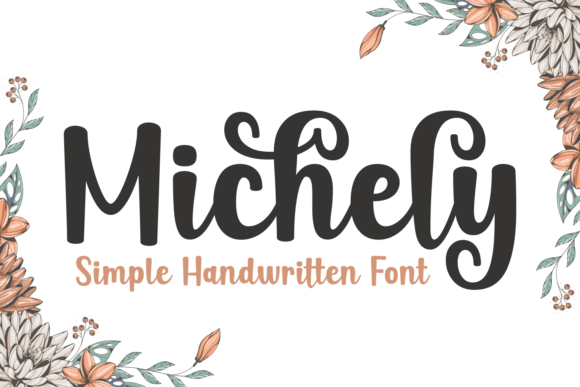
When we talk about the "personality" of a typeface, we are really talking about the subtle curves, spacing, and weight distribution of the letters. Michely strikes a specific balance that is difficult to find. It possesses the organic irregularity of natural handwriting, which adds warmth, but it maintains enough consistency to ensure high readability. It isn't a messy script font that requires a magnifying glass; it is legible at various sizes.
The visual appeal of Michely lies in its simplicity. It avoids overly dramatic swashes or complicated ligatures that can sometimes make handwritten fonts difficult to work with. Instead, it focuses on flow. The characters connect in a way that guides the eye naturally across the page, making it a fantastic choice for longer quotes or product descriptions where you want to maintain a soft, inviting tone.
Why "Friendly Charm" Matters in Branding
In the world of brand identity, consistency is king, but emotion is the queen. You can have the most consistent color palette in the world, but if your typography feels cold, you will struggle to build trust with your audience. Michely injects a dose of empathy into your visual language. It tells your audience that there are real people behind the logo.
This is particularly relevant for small business owners and solopreneurs. If you are a baker, a coach, a lifestyle blogger, or a boutique owner, your brand is an extension of your personality. Using a rigid sans serif font everywhere might look "clean," but it can also feel distant. Michely allows you to express your unique voice. It suggests creativity, care, and authenticity—traits that modern consumers actively seek out.
Practical Applications: Where Michely Shines
Understanding where a font works best is just as important as liking how it looks. Michely is a workhorse, but it is a specialized one. It thrives in environments where you need to grab attention or connect emotionally. Here is how you can deploy this creative font across various mediums.
Packaging and Product Design
Imagine you are designing a label for a small-batch candle or a line of organic skincare. A standard serif font might look too traditional, while a geometric sans serif font might look too clinical. Michely hits the sweet spot. It suggests that the product inside was made with care. It works beautifully for:
- Product Packaging: Use it for the main product name to draw the eye, pairing it with a simple sans serif for the ingredients list.
- Labels: Perfect for "Handmade with Love" tags or care instructions.
- Invitations: Whether it is a wedding or a store opening, Michely sets a celebratory, personal tone.
Digital Content and Social Media
In the fast-paced world of social media, stopping the scroll is the primary objective. Michely works exceptionally well as a display font for Instagram posts, Pinterest pins, and TikTok overlays. Because it is a handwritten font, it breaks the monotony of the digital grid. It feels tactile and real, even on a screen.
For bloggers and content creators, consider using Michely for pull quotes or section headers. It creates a visual hierarchy that breaks up long blocks of text. If you are designing a lead magnet (like a free PDF guide), using Michely for the title can make the document feel more valuable and less like a dry report.
Logo Design and Branding Assets
Using a handwritten style for a logo can be risky because trends change. However, Michely has a timeless simplicity. It is ideal for brands that want to position themselves as artisanal, bespoke, or approachable. It creates excellent design assets when used for secondary branding elements, such as patterns, watermarks on photography, or sign-offs in email newsletters.
Strategic Typography: Pairing and Hierarchy
One of the biggest mistakes I see in modern typography is using a single font for everything. While Michely is versatile, it truly sings when paired with the right partner. As a general rule of thumb, contrast is key. Because Michely has a lot of personality and texture, you want to balance it with something more neutral.
A clean sans serif font is usually the best companion. Think of fonts like Montserrat, Lato, or Open Sans. These fonts act as the "workhorse," handling the body text and fine print, while Michely acts as the "hero," handling headlines and call-outs. This creates a clear visual hierarchy that makes your designs look professional and easy to navigate.
Ensuring Readability and Professionalism
Even with the best premium font, context matters. Michely is a display font, meaning it is designed for impact at larger sizes. While it is legible, using a handwritten style for 10-point body text in a dense report is usually a mistake. For editorial design or web design, reserve Michely for H1 and H2 headings, buttons, or accent text.
Furthermore, consider the medium. On print materials like business cards or flyers, the texture of the paper can enhance the tactile feel of the font. On digital screens, ensure there is enough contrast between the text color and the background to keep the thin strokes of the handwriting visible.
Compatibility and Commercial Use
For those using cutting machines for physical products—such as vinyl decals, t-shirts, or papercrafts—compatibility is crucial. Michely is optimized for use with Sure Cuts A Lot, ensuring that the vector paths are clean and your machine cuts smoothly without jagged edges. This is a massive time-saver for crafters and hobbyists who don't want to spend hours editing nodes.
When adopting a new typeface for a business, always review the licensing. Michely comes with licensing options that cover both personal and commercial use. This is vital for entrepreneurs. You need the peace of mind that comes with knowing you have the legal right to use the font on your merchandise, your website, and your marketing materials. A commercial font license is an investment in your business's security.
Final Thoughts on Choosing Michely
Choosing a typeface is an act of curation. You are deciding how your brand will speak before it even says a word. Michely offers a solution for those who find standard serif fonts too stuffy and generic sans serifs too boring. It brings a human element to the table that is hard to replicate with automated tools.
Whether you are a designer looking for a fresh addition to your library, a marketer aiming to soften a campaign, or a crafter needing a reliable cut file, Michely delivers. It proves that a handwritten font can be both charming and functional. Give it a try on your next project; you might be surprised at how much personality a few letters can add to your work.