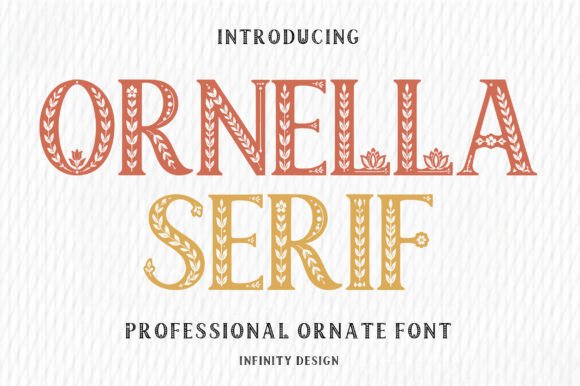
Ornella Serif: Where European Folk Art Meets Modern Design
There's a certain magic in a typeface that feels both ancient and alive, one that carries the weight of history in its strokes yet breathes with organic energy. Ornella Serif is precisely that kind of premium font. It's not just a collection of letters; it's a visual narrative, a bridge between the sturdy elegance of classical Roman serifs and the whimsical, detailed charm of hand-carved linocut art. For designers and creators seeking to inject a story into their work, this display font offers a compelling toolkit.
A Typeface with a Story in Every Stroke
At its core, Ornella Serif is a study in contrast and balance. The foundation is a set of bold, stable letterforms with clear geometric proportions—think of the reliable structure of a classic serif font. This gives it immediate readability and a sense of authority. But where it truly distinguishes itself is in the intricate detailing that fills each capital letter. The hollowed-out cores are not empty; they're gardens. Sprawling botanical vines, symmetrical columns of leaves, blooming wildflowers, and fine line carvings transform each glyph into a miniature artwork. This isn't a digital simulation; it's a deliberate homage to the imperfect, textured quality of handmade craftsmanship, capturing an authentic, artisanal feel that flat, sterile fonts often lack.
This unique personality makes Ornella Serif a powerful tool for brand identity. It doesn't just display text; it communicates values. The European folk art influences speak to tradition, timelessness, and a connection to nature. The crisp, engineered structure, however, ensures it doesn't look amateurish or purely decorative. It strikes a rare balance: it's ornate yet functional, historic yet relevant. This makes it an exceptional creative font for projects that need to feel both luxurious and grounded, sophisticated and approachable.
Where Does Ornella Serif Shine? Real-World Applications
Knowing a font is beautiful is one thing; knowing where to use it effectively is another. Ornella Serif excels as a headline or accent typeface where its detailed nature can be fully appreciated without compromising clarity. Consider these practical applications:
- Artisanal & Organic Branding: This is a natural home for the font. Think packaging design for boutique food brands, botanical tea labels, or handmade cosmetics. The floral motifs and rustic elegance directly reinforce product stories of natural ingredients and traditional methods.
- Publishing & Editorial Design: For editorial design, Ornella Serif can create stunning chapter titles, book covers (especially in fantasy, historical fiction, or poetry), and magazine headers. It adds a layer of visual richness that engages readers before they even read a word.
- Cottagecore & Folk Aesthetic Projects: The font is a perfect match for the cozy, pastoral aesthetic of cottagecore. Use it for wedding invitations, greeting card headers, blog logos, or social media graphics for brands in the lifestyle or crafting space.
- Specialty & Luxury Items: Its historic luxury feel lends itself beautifully to logo design for high-end wellness brands, vintage-inspired apparel, or specialty coffee roasters. It also works wonderfully for festive holiday typography, adding a touch of handcrafted charm to seasonal campaigns.
- Digital & Print Projects: While best used at larger sizes, it can be a striking element in web design for hero sections or in print for posters and album artwork. The key is to give it space to breathe so its details remain crisp.
Making It Work: Practical Guidance for Designers and Creators
Integrating a specialty font like Ornella Serif into your workflow requires a thoughtful approach. Here’s how to ensure it enhances, rather than overwhelms, your project.
Evaluating Fit and Readability
First, assess the project's tone. Ornella Serif communicates tradition, nature, and handcrafted quality. If your brand is ultra-modern, minimalist, or tech-focused, it may create a mismatch. For the right project, however, it becomes a strategic asset. A critical consideration is readability. This is a display font designed for impact, not for body copy. Its intricate details will become a muddy blob at small sizes. Use it for headlines, logos, pull quotes, or single impactful words. Pair it with a clean, simple sans serif font or a highly legible script font for body text to create a clear visual hierarchy.
Exploring Font Pairings and Styles
A successful font pairing often involves contrast in style and weight. Try combining Ornella Serif with a geometric sans serif like Montserrat for a clean, contemporary feel, or with a gentle, readable serif like Lora for a more traditional, harmonious look. Review the full character set of the commercial font you license. Look for stylistic alternates, ligatures, or additional symbols that might offer more versatility. Always test your chosen pairings in context—mock up a headline on a website or a label to see how the fonts interact with color, imagery, and spacing.
Licensing and Long-Term Use
When you invest in a premium font like Ornella Serif, understand the licensing. Most commercial licenses cover a wide range of uses, from logo design to digital ads to printed merchandise, but it's your responsibility to verify the terms align with your intended use. This ensures your design assets are used legally and professionally, protecting both your work and the type designer's craft.
In the crowded landscape of modern typography, Ornella Serif stands out by offering more than just letters—it offers a mood, a story, and a tangible connection to artistic tradition. By using it strategically where its personality can resonate, you transform ordinary text into a memorable piece of visual storytelling, elevating your project's perceived value and emotional appeal.