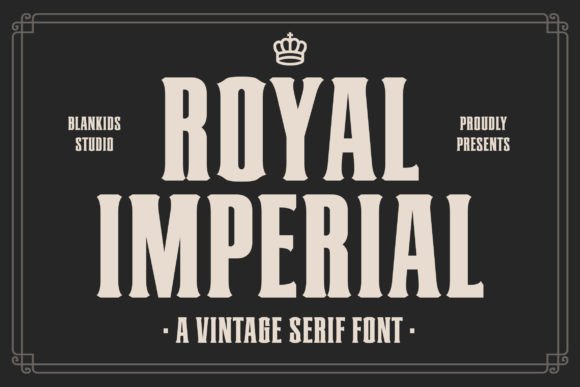
Royal Imperial: A Bold Serif for Lasting Impressions
There’s a specific kind of presence some designs have—a weight, a confidence that stops a viewer mid-scroll or makes them pause on a bookshelf. It often comes down to the typography. A typeface like Royal Imperial is built for exactly that effect. This isn’t a font that whispers; it’s a serif that speaks with authority and a clear, vintage-inspired voice. It carries the precision of a well-set newspaper headline from a bygone era, combined with the robust clarity needed for modern screens.
At its core, Royal Imperial is a display font. Its personality is assertive and structured. The letterforms are intentionally bold, with strong vertical strokes and refined, bracketed serifs that guide the eye. There’s a deliberate craftsmanship in its curves and terminals, avoiding the sterile feel of some modern typefaces. Instead, it offers a touch of vintage charm—think of the elegance of classic literature covers or the steadfast logos of heritage brands. This gives it a dual nature: it feels both timeless and immediately impactful. It’s a premium font designed for moments where your text needs to be the focal point, not just the supporting player.
Where This Serif Font Truly Shines
Knowing where to deploy a font with this much character is half the battle. Its strength lies in projects that require a strong visual hierarchy and a sense of established quality. For brand identity work, Royal Imperial can form the cornerstone of a logo or wordmark for businesses that want to project stability, luxury, or tradition. Think of a boutique law firm, a artisanal distillery, or a high-end furniture maker. The font’s inherent seriousness and elegance lend instant credibility.
In editorial design and packaging design, it excels at creating commanding headlines and product names. Imagine it on the cover of a hardback novel, the label of a premium coffee blend, or the masthead of a sophisticated magazine. Its clarity at large sizes ensures it remains readable while making a powerful statement. For digital design, it’s perfect for hero sections on websites, impactful call-to-action buttons, or distinctive social media graphics where you need to cut through the noise. It pairs exceptionally well with clean sans serif fonts for body text or even a delicate script font for a touch of contrast, creating a balanced and professional font pairing.
Practical Guidance for Using Royal Imperial
Choosing a creative font is more than just picking one that looks good in a specimen sheet. You need to evaluate its fit for your specific project. Start by considering the mood. Does the project call for authority, tradition, and precision? If you’re designing for a tech startup focused on speed and innovation, Royal Imperial might feel too heavy. But for a financial advisor or a classic menswear brand, it could be perfect.
Always test it in context. Don’t just type out the alphabet. Set it with your actual project copy—your brand name, your article headline, your product title. Check the readability at the intended size, especially on a mobile screen. A great display font should be legible, not just decorative. Review the included styles. Does it come with different weights, italics, or stylistic alternates? These extras are valuable design assets that allow for more nuanced typography and help maintain brand consistency across different applications.
Finally, understand the licensing. If this is for a commercial project—a client’s logo, a product you sell, a monetized blog—the font must have a proper commercial license. Using a premium font like this legally protects your work and supports the type designers who craft these tools. Taking these steps ensures that a typeface like Royal Imperial doesn’t just look impressive, but works effectively and professionally within your entire creative workflow.